The paid ads tools most media buyers and creative teams rely on fall into five jobs: finding ad ideas (Foreplay, Atria, Meta Ad Library), reading creative performance (Motion), making ads with AI (AdCreative.ai, Creatify, Arcads), tracking sales (Hyros, Northbeam) and sourcing UGC (Billo).
If you only pick one paid tool, pick one for the job that is your bottleneck right now, not a full stack.
How we picked: vendor pricing pages and product docs, checked in November 2026, plus the real results in our database. We have not used these tools ourselves.
| Tool | Best for | Starting price (as of November 2026) | Free plan or trial |
|---|---|---|---|
| Foreplay | Swipe files and competitor tracking | $59/month | 7-day trial |
| Atria | Ad library plus account analytics in one | $129/month billed annually (discounted price shown) | None listed |
| Meta Ad Library | Free look at any advertiser's live Meta ads | Free | Free |
| TikTok Creative Center | TikTok top ads and trends | No price listed | Part of TikTok's ad resources |
| Motion | Creative analytics for teams spending $50k+/month | $999/month | Trial offered |
| AdCreative.ai | Fast AI static ad variations | $39/month | 7-day trial |
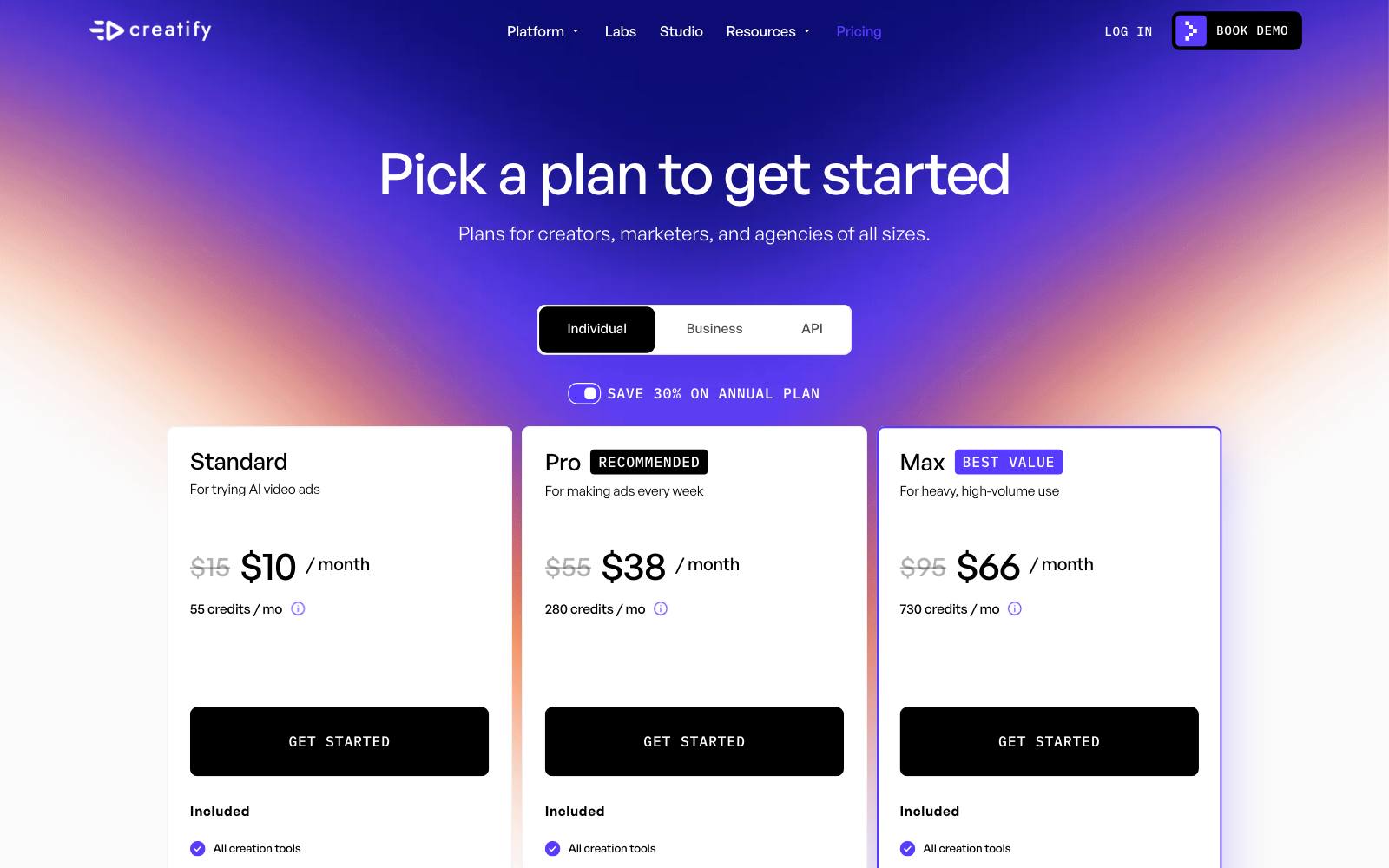
| Creatify | Cheap AI video ads | $15/month ($10 billed yearly) | Free plan (watermarked) |
| Arcads | AI actor UGC-style video | Not listed publicly | Trial mentioned |
| Hyros | Call-funnel and info-product tracking | Custom quote | None listed |
| Northbeam | Multi-touch attribution for larger DTC brands | $1,500/month | None listed |
| Billo | Pay-per-video UGC from real creators | $1,000 credit pack (videos from $99) | 30-day money-back on packs |
We don't show star ratings here because we couldn't confirm them on the review sites themselves.
How we pick (and our affiliate disclosure)
Every tool on this page does one job that shows up again and again in the results people share with us: finding angles, reading which hooks hold attention, making more creative, measuring what actually sold, and getting real creators on camera.
Prices come from each vendor's own pricing page.
Where a vendor hides its price, we say so.
Foreplay, Atria, AdCreative.ai and Hyros have affiliate programs with us, so we may earn a commission if you sign up through our links.
That doesn't change the order or the downsides we list. The full details are in our disclosure.
Ad inspiration and swipe files
Most tired accounts don't need a new campaign structure.
They need new ideas. @SamPiliero took one account from a $101.29 CPA to $60.50 (−40%) by launching 20 new angles, and a swipe file is where those angles usually start.
For a deeper comparison, see our guide to ad spy and swipe tools.
Once you have ideas, our lists of video ad makers and ad mockup tools cover the build step.
The 11 best paid ads tools
1. Foreplay
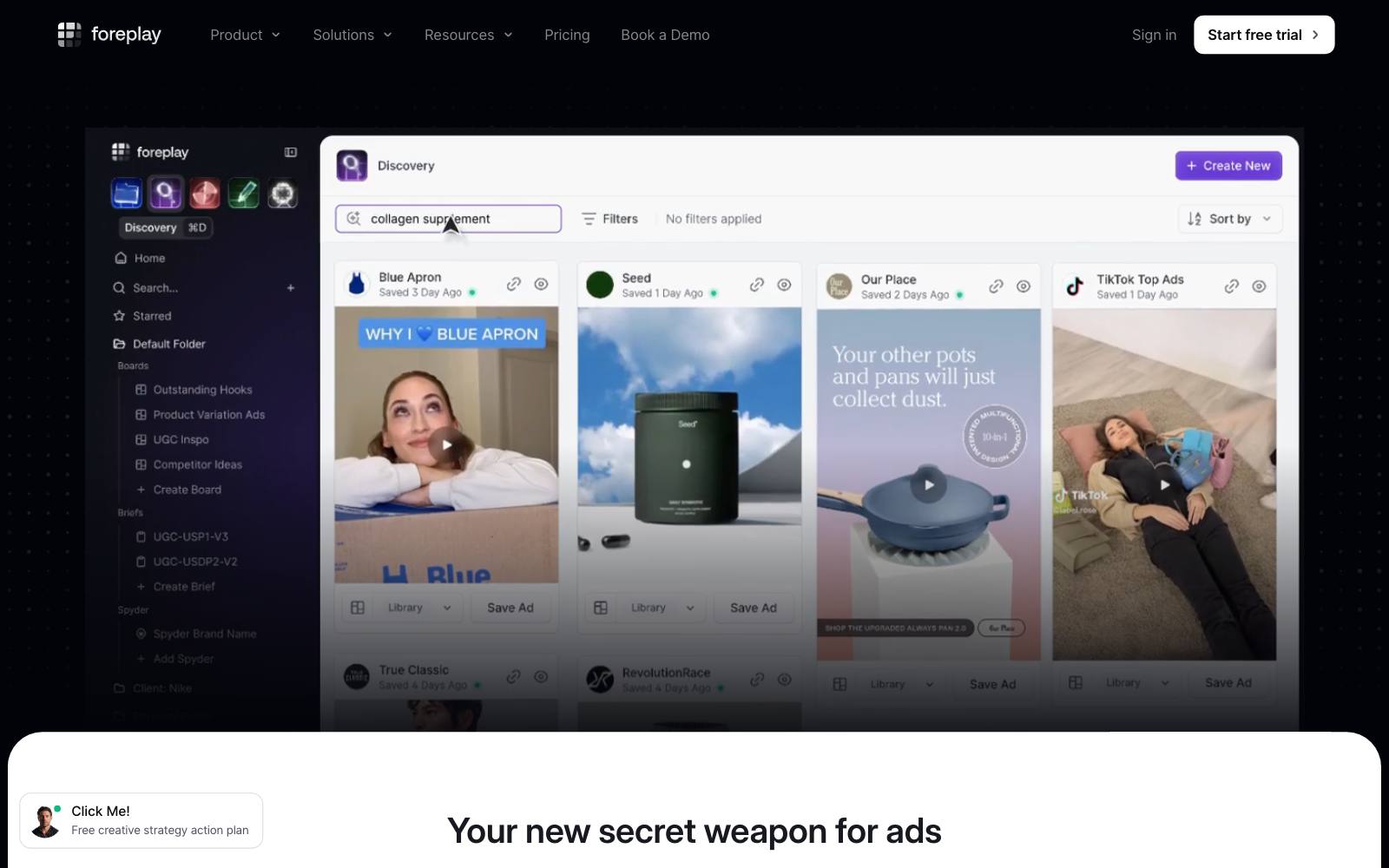
Best for: Creative strategists and agencies who save a lot of ads and want to track competitors.
What it does: Foreplay saves ads from ad libraries into an organized swipe file and turns them into briefs.
Its homepage says it covers Meta, TikTok and LinkedIn ads, with a searchable Discovery database and Spyder for tracking competitors.
Key features:
- Swipe File and Chrome extension for saving ads
- Discovery search across a large ad database
- Spyder competitor tracking (Workflow plan and up)
- Briefs with storyboards
- Lens creative reporting (Workflow plan and up)
Pros:
- Low entry price for a solo buyer
- Saving and briefing live in one place, so ideas don't get lost
Cons:
- The Basic plan is one user and has no competitor tracking
- Agency-level tracking jumps to $459/month
- Not for you if you only need a few examples a month: the free Meta Ad Library will do
Pricing: Basic $59/month, Workflow $175/month, Agency $459/month, about 15% less billed yearly, with a 7-day trial, as of November 2026 (Foreplay pricing). Foreplay has an affiliate program with us.
In our archive: The 20-angle refresh above (CPA $101.29 to $60.50, @SamPiliero) is the kind of work a swipe file feeds.
So is MHI Media's founder car-selfie video, which they report cut CPA 62% against polished UGC and studio ads.
2. Atria
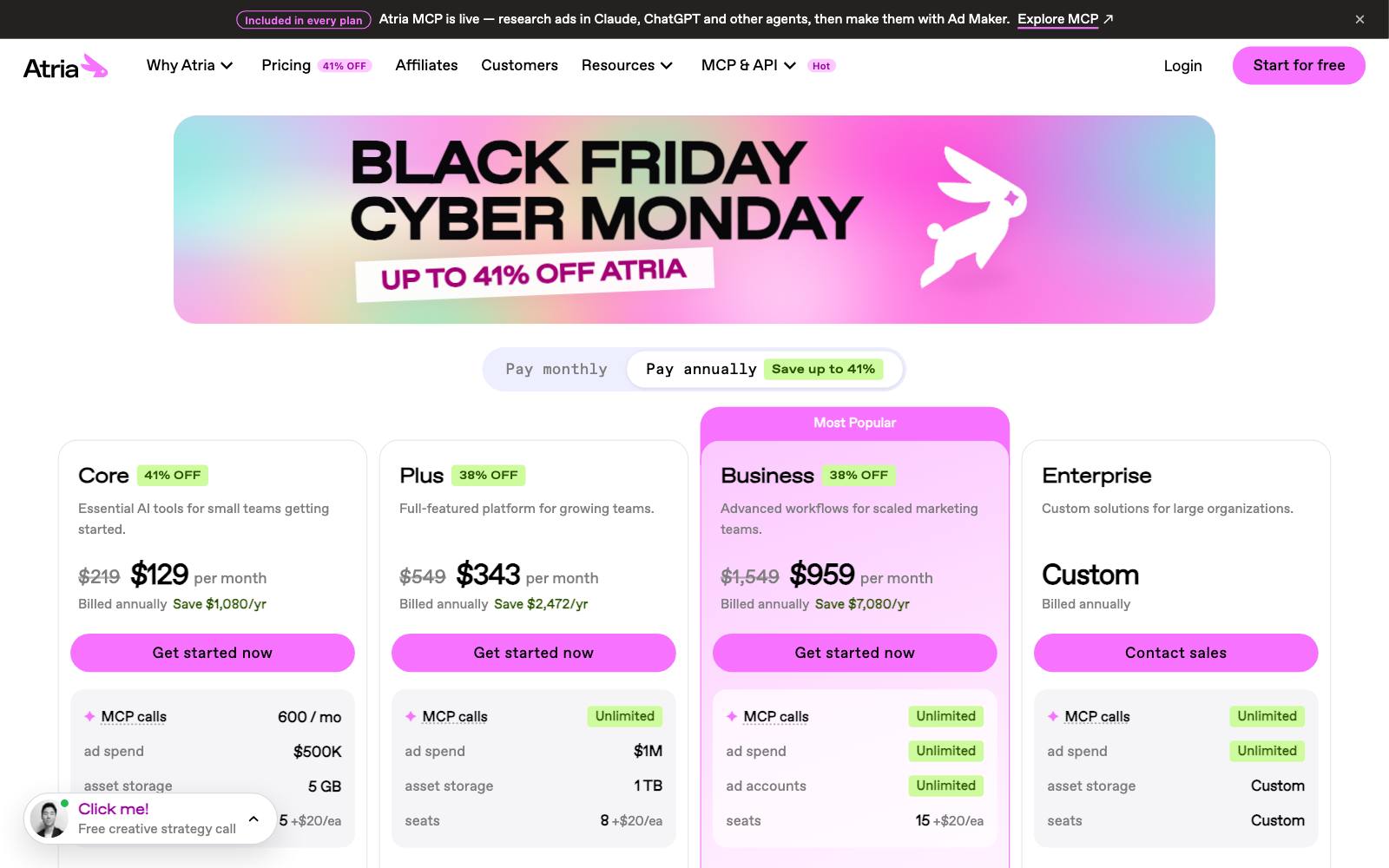
Best for: Teams who want ad inspiration and analysis of their own ad accounts in one subscription.
What it does: Atria combines an ad library for following brands with creative analytics on your connected ad accounts and AI credits for briefs.
Plans are sized by brands followed, ad accounts connected and ad spend analyzed.
Key features:
- Follow 50 to 200 brands depending on plan
- Connect your ad accounts and analyze spend ($500K/month cap on Core)
- Monthly AI credits for briefs and analysis
- Asset storage and an API on higher plans
Pros:
- Replaces two tools (swipe file and analytics) for some teams
- Clear limits on each plan
Cons:
- Higher entry price than Foreplay's Basic plan
- No free trial or free plan listed
- The prices shown carry a discount badge, so check the billing term before you buy
Pricing: Core $129/month, Plus $343/month, Business $959/month (billed annually), Enterprise custom, as of November 2026 (Atria pricing). Atria has an affiliate program with us.
In our archive: @alexgoughcooper's makeup teacher hook video (CPA $47.13, hook rate 45.9%) shows the per-ad metrics a combined library-and-analytics tool lets you compare against competitors' hooks.
3. Meta Ad Library
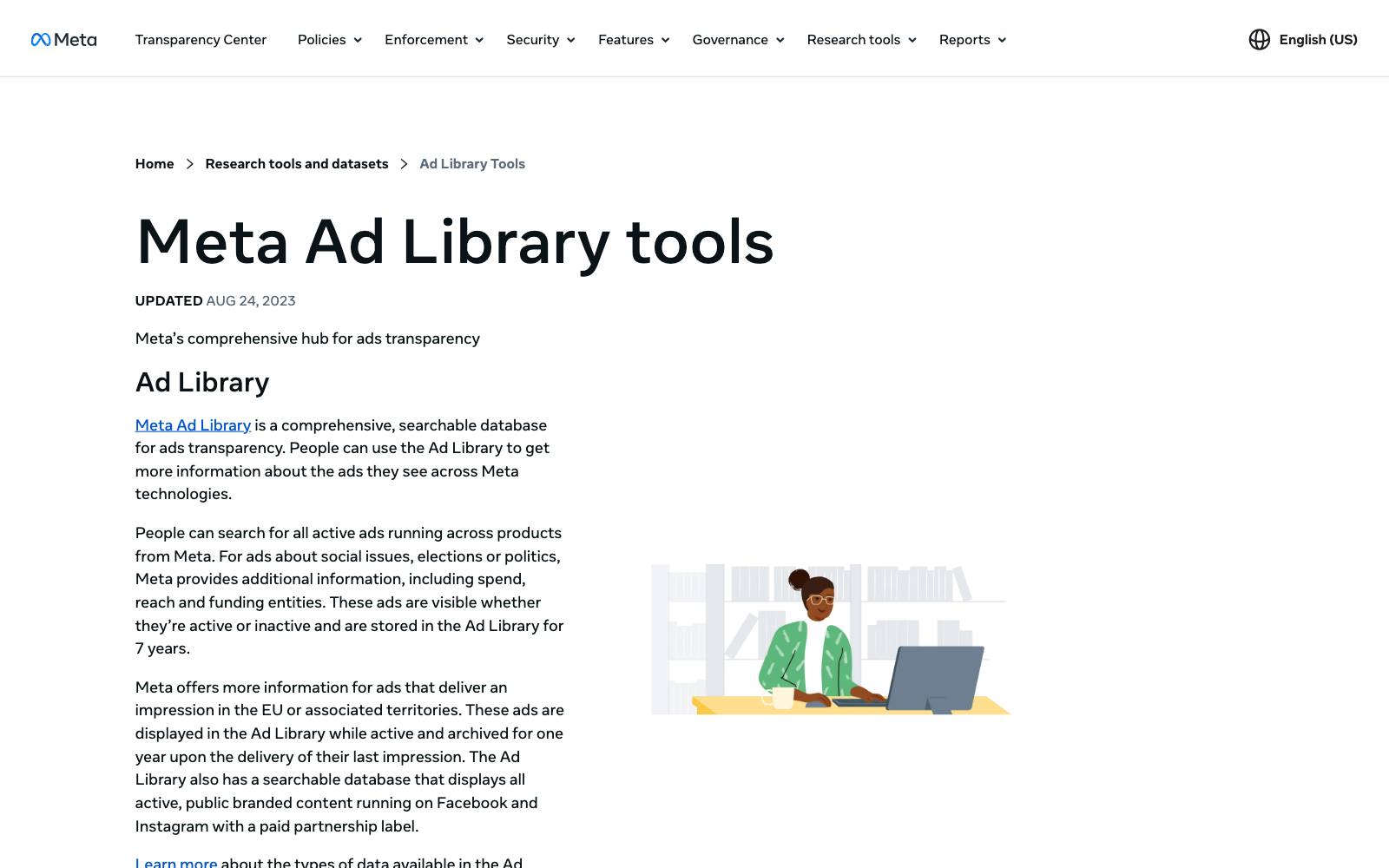
Best for: Anyone starting out, and anyone who wants to see a competitor's live Facebook and Instagram ads today.
What it does: Meta describes the Ad Library as a searchable database of active ads across its apps, including branded content with a paid partnership label (Meta Transparency Center).
It's the raw source most paid swipe tools build on.
Key features:
- Search active ads by advertiser or keyword
- Partnership (branded content) ads are searchable too
- Spend and reach shown for social issue, election and political ads
- Extra detail for ads delivered in the EU
Pros:
- Free and public
- Straight from the source, so nothing is missing because a scraper skipped it
Cons:
- No spend or results for ordinary commercial ads outside the EU, so you can't tell winners from tests
- No saving, tagging or team folders
- Meta only
Pricing: Free.
In our archive: Influee reports BabyLoveGrow cut CPA 20% and raised ROAS 22% after switching to partnership ads (vendor-reported).
Those partnership ads are exactly what the library's branded content search shows.
4. TikTok Creative Center
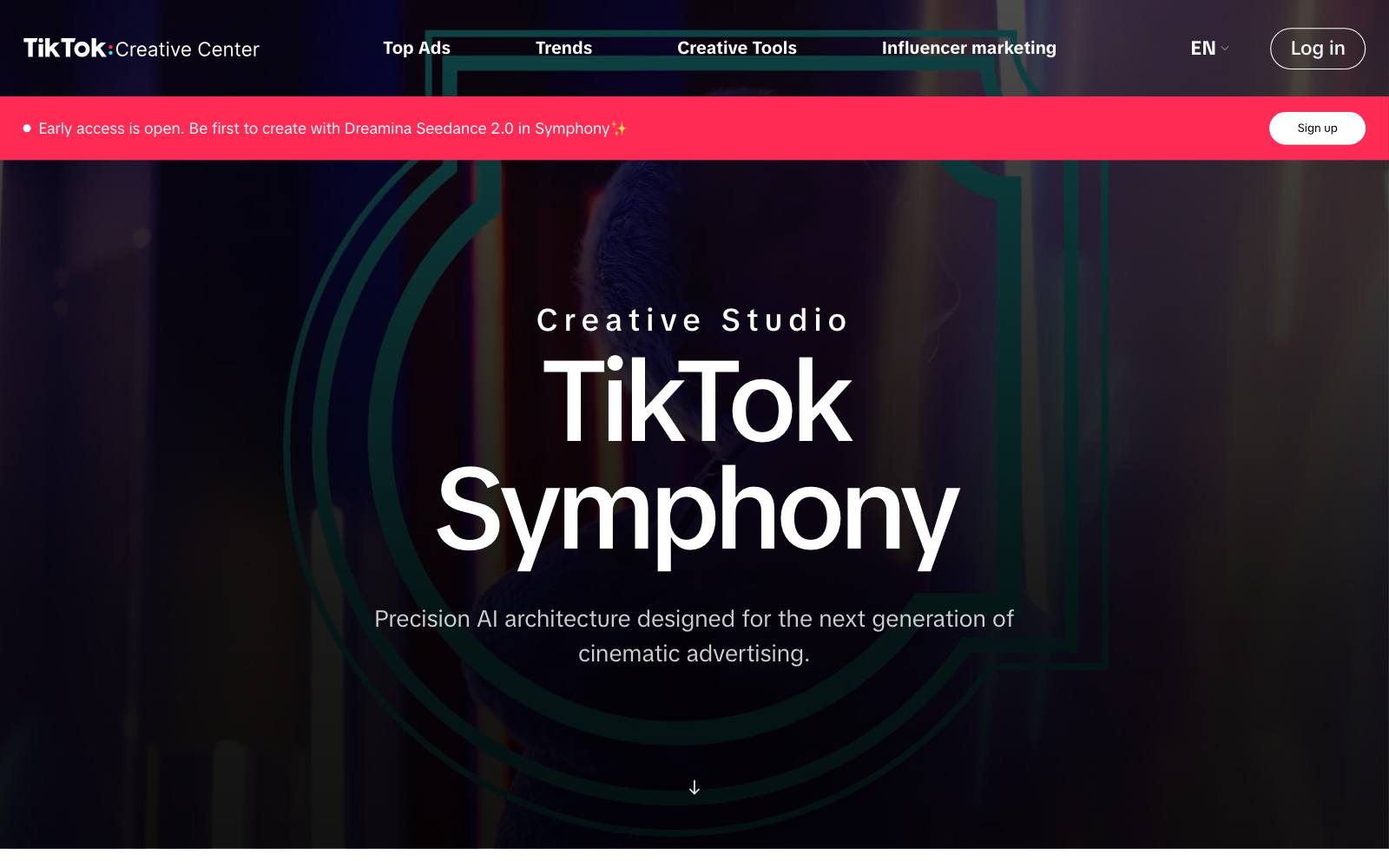
Best for: TikTok advertisers who want to see top-performing ads and current trends before briefing creators.
What it does: TikTok's Creative Center has a Top Ads section for studying successful campaigns, trend pages, and links to TikTok's Symphony AI creative tools.
Key features:
- Top Ads browsing
- Trends for sounds, hashtags and topics
- Access to Symphony Creative Studio for AI-made content
Pros:
- Native TikTok data, not scraped
- Useful for spotting formats before they show up in paid tools
Cons:
- TikTok only
- Some features need sign-in, and you can't build a long-term swipe file in it
Pricing: No price is listed on the page.
In our archive: TikTok reports TANP cut cost per install 39% by running creator Spark Ads instead of standard in-feed ads, and Endel got a $3 CPI against $7 (both vendor-reported).
Creative analytics
Creative analytics tools pull ad-level numbers like hook rate, hold rate and CPA into visual reports, so you can see which hooks and formats are winning without exporting spreadsheets.
Our full list of creative analytics tools covers more options, including cheaper ones.
5. Motion
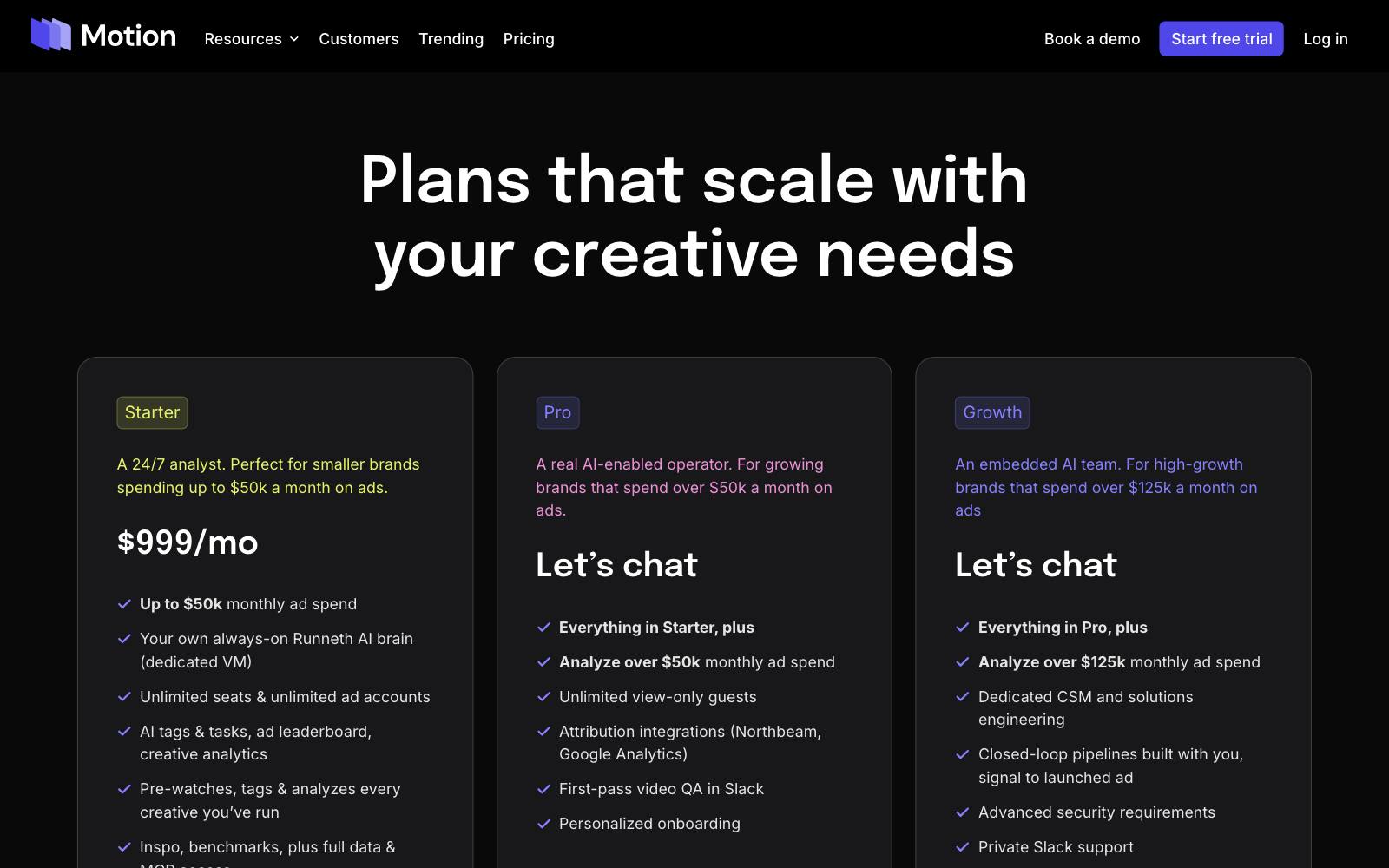
Best for: Brands and agencies spending $50k+ a month on Meta, TikTok or YouTube with several people making creative.
What it does: Motion turns ad account data into creative reports and leaderboards, with AI tagging of every ad.
Its pricing page also lists Slack reports, brief and hook generation, and benchmarks.
Key features:
- Ad leaderboard and creative analytics
- AI tags on every creative
- Daily and weekly reports in Slack
- Unlimited seats and ad accounts
- Northbeam and Google Analytics integrations on Pro
Pros:
- Unlimited seats, so the whole creative team can use it
- Built for creative strategists, not just media buyers
Cons:
- $999/month is a lot for a small account
- Pricing over $50k/month in spend is "let's chat"
- Not for you if you spend a few thousand a month: Ads Manager columns will tell you most of the same story
Pricing: Starter $999/month for up to $50k/month in ad spend; Pro and Growth are custom, as of November 2026 (Motion pricing).
In our archive: @alexgoughcooper's ads show why per-creative reporting matters: an old-footage b-roll mashup ran at a $58.61 CPA on $107k spend, and a faceless "yapper" video at $88.56 on $141k.
Spotting gaps like that across hundreds of ads is the job these tools do.
AI ad creation
AI tools make more variations fast, which helps because creative volume tends to matter.
NP Digital's chart in our archive shows campaigns with 20+ ads had a 6.8% lower CPA than ones with 1–2 ads.
But AI output still needs a human to choose the angle.
See our full list of AI ad generators.
6. AdCreative.ai
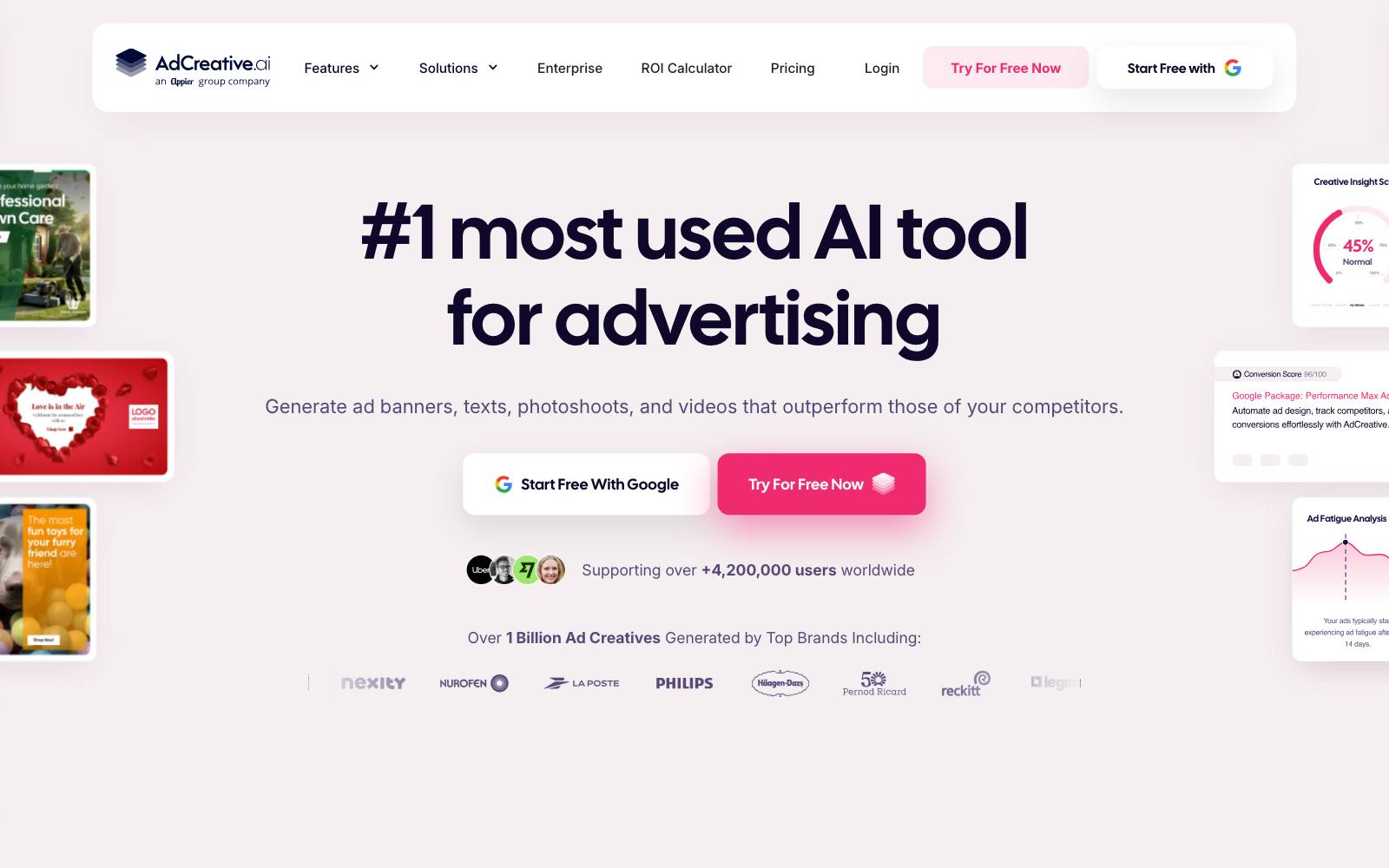
Best for: Small teams and solo founders who need lots of static ad variations without a designer.
What it does: AdCreative.ai generates ad creatives from your brand assets, plus product photos and short videos.
It also offers creative scoring, competitor analysis and compliance checks.
Key features:
- Ad generation in many sizes
- Product photo and video generation
- Creative scoring before launch
- Instant ads built from your website
Pros:
- Low entry price and a 7-day trial
- Big discounts on quarterly and yearly billing
Cons:
- Starter gives only 20 credits a month
- Template-driven statics can look similar to other advertisers using the same tool
- Treat its performance predictions as vendor claims and test for yourself
Pricing: Starter $39/month (20 credits), Professional $249/month (300 credits), Ultimate $999/month, monthly billing; a sale banner on the site showed 25% off quarterly and 50% off yearly, as of November 2026 (AdCreative.ai pricing). AdCreative.ai has an affiliate program with us.
In our archive: Marpipe reports Ridge raised ROAS 53% by adding colored backgrounds to catalog ads, and AgelessRx's top ad showed a 77% lower CPA after a one-week test of 5 ads (both vendor-reported).
Simple visual variations like these are what AI static tools make cheaply.
7. Creatify
Best for: Testing AI video ads on a small budget.
What it does: Creatify makes video and image ads with AI actors and templates.
It sells credits monthly, plus an API for teams that want to generate ads at scale.
Key features:
- AI actors and ad templates
- Video and image ads
- API plans for automation
Pros:
- A free plan (10 credits a month, watermarked)
- Paid plans start low
Cons:
- Small plans run out of credits quickly
- AI actors can feel generic next to real customers
Pricing: Free plan; Standard $15/month, Pro $55/month, Max $95/month, Business $195/month, or $10, $38, $66 and $136 a month on annual plans (about 30% off), as of November 2026 (Creatify pricing).
In our archive: @runtraffic reports AI-made video ads on YouTube at a conversion value/cost of 1.58, up 0.21, with no control.
8. Arcads
Best for: Brands that want UGC-style talking-head videos without hiring creators.
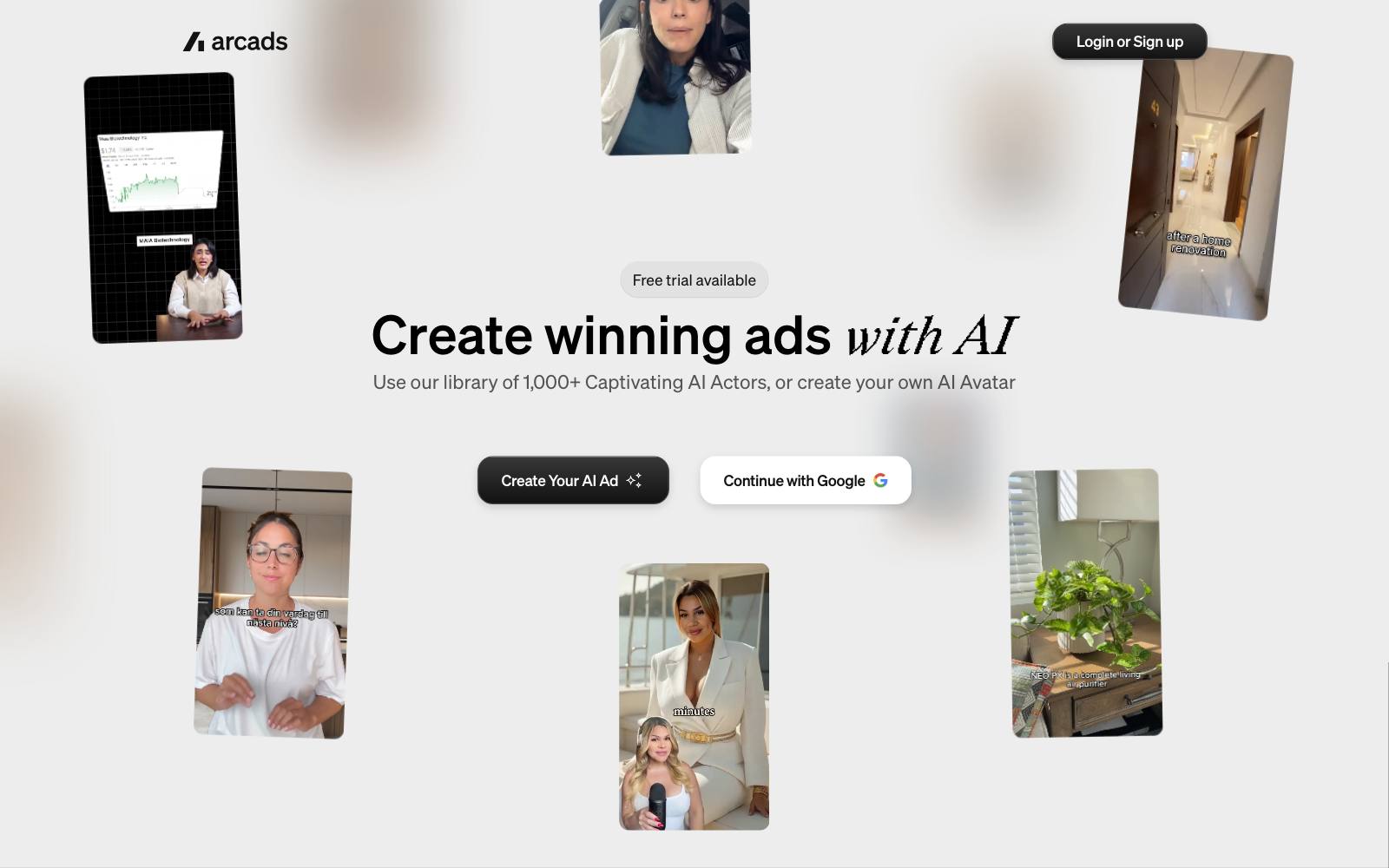
What it does: Arcads makes video ads with AI actors (it lists over 1,000) and custom avatars, plus editing tools for captions, voice and translation into 30+ languages.
Key features:
- AI actors and custom avatars
- Several video generation models
- Translation and localization
- Emotion control and ad templates
Pros:
- Fast way to test many scripts and hooks
- Localization for multi-country accounts
Cons:
- Pricing is not shown on its public site
- AI people pretending to be customers can raise trust and disclosure issues in some verticals
Pricing: Not listed publicly as of November 2026; the Arcads site mentions a free trial.
In our archive: The YouTube AI video result above is the closest match.
We don't yet have a result credited to Arcads itself.
Attribution and tracking
Platform dashboards often overcount or undercount sales, and trusting the wrong number can lead you to cut ads that work.
One store @SamPiliero's team worked with had switched off Meta and Google believing they overcounted, and was losing $2,200 a day.
After a rebuild with a new pixel, offer and creative, total sales rose 102.45% to $64,324 (many changes at once, and spend rose too).
More options are in our guide to attribution software.
9. Hyros
Best for: Info-product, coaching and call-funnel businesses with long or offline sales cycles.
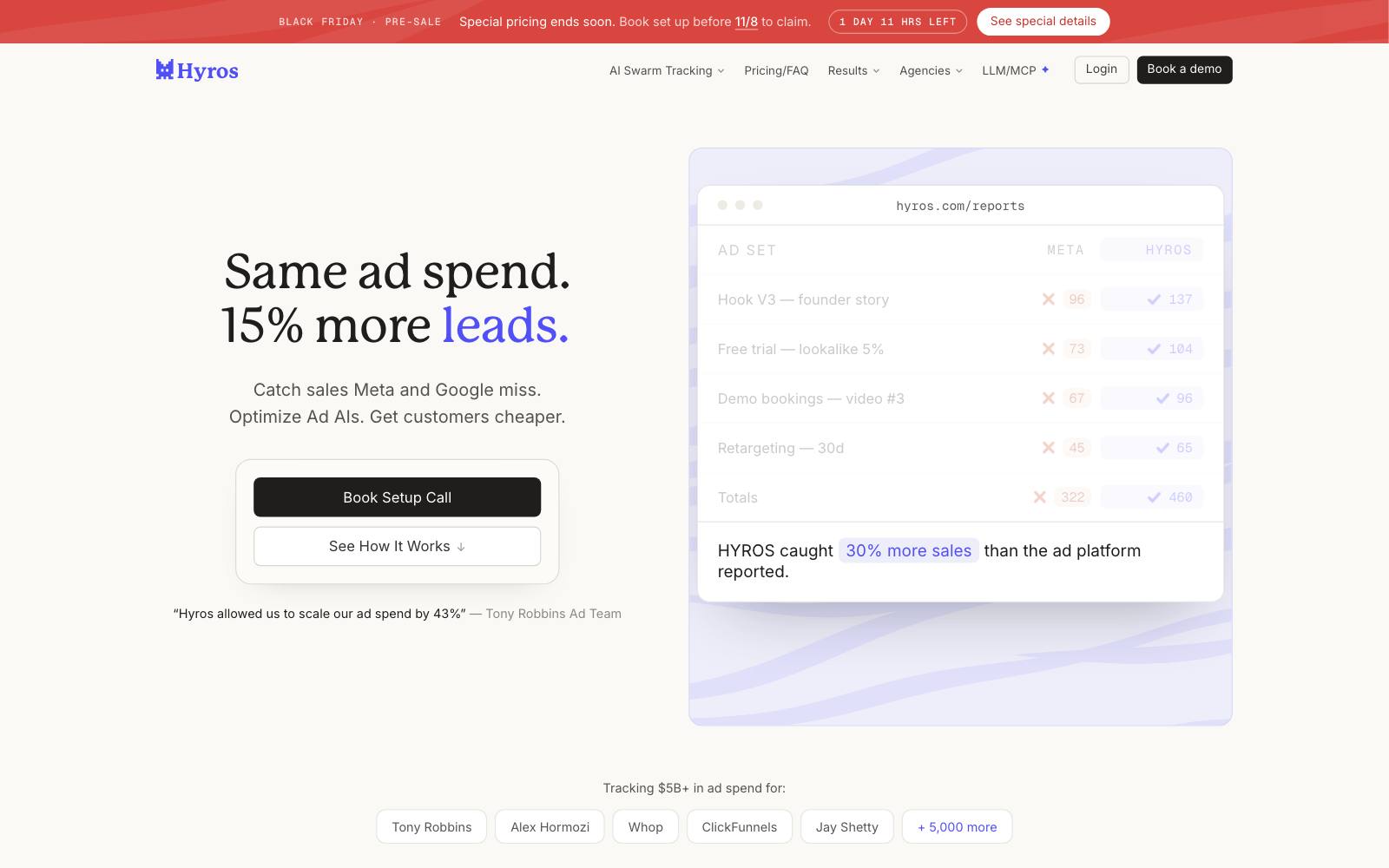
What it does: Hyros tracks sales back to ads, including sales Meta and Google miss, and feeds that data back to the ad platforms. It sells one plan with setup included.
Key features:
- Tracking for ecommerce, SaaS, B2B calls and education
- Conversion data sent back to Meta and Google
- Setup team and an AI analyst included
- Claude MCP integration
Pros:
- Built for call and webinar funnels many ecommerce tools ignore
- Done-for-you setup
Cons:
- No public price; you need a setup call
- Its "your ads grow or you don't pay" guarantee and result claims are vendor statements, so read the terms
- Not for you if you sell low-ticket products straight from a Shopify store and Meta's own reporting already lines up with your sales
Pricing: Custom, based on the revenue it tracks for you, as of November 2026 (Hyros pricing). Hyros has an affiliate program with us.
In our archive: A B2B lead gen result reposted by @SamPiliero shows the kind of funnel that needs tracking past the click: an agency owner says ads set up this way made over $100k from $13k in ad spend.
That revenue is self-reported and not shown, and results like this aren't typical.
10. Northbeam
Best for: DTC brands spending enough across several channels to justify a dedicated attribution tool.
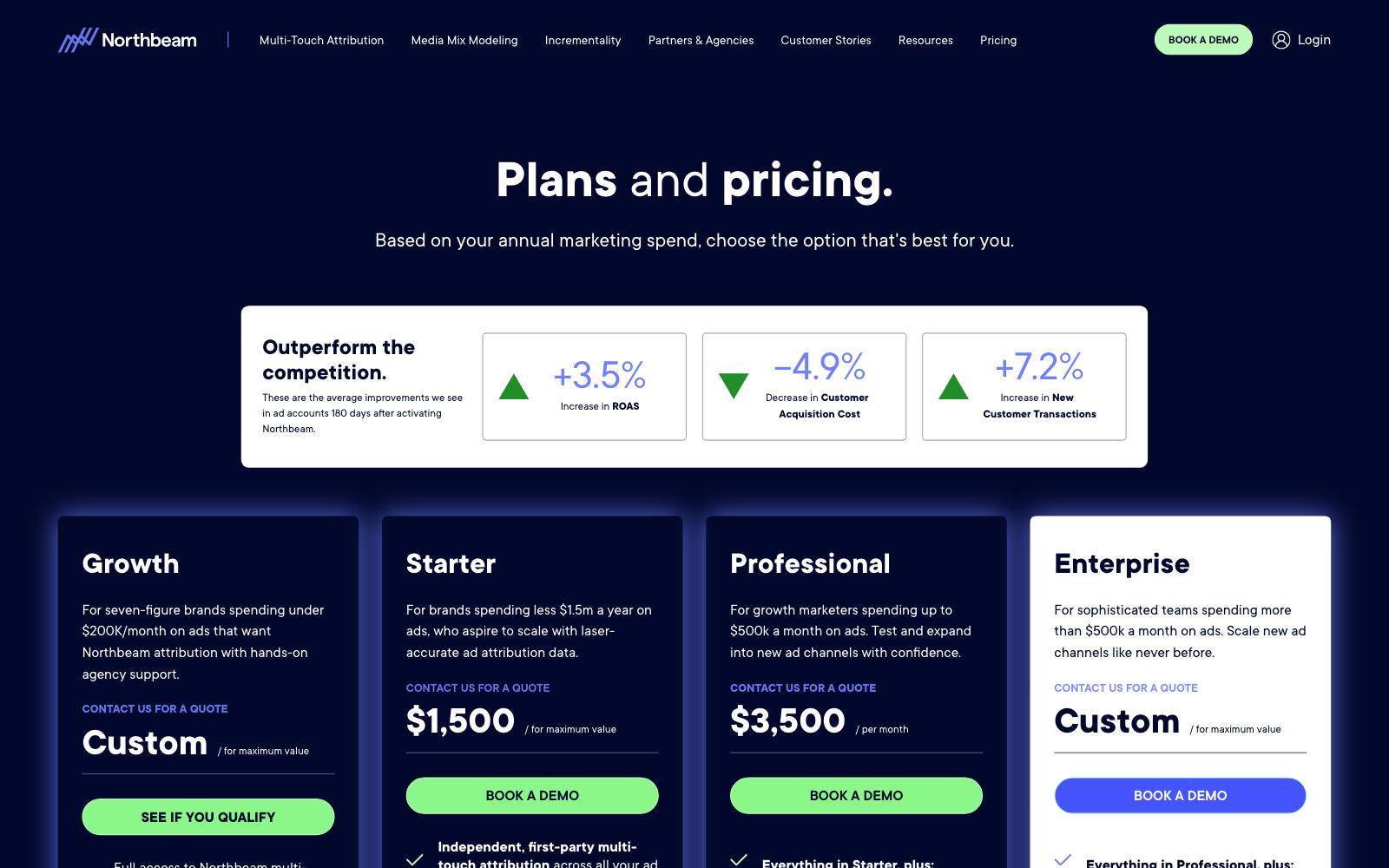
What it does: Northbeam offers first-party multi-touch attribution across ad channels with custom dashboards.
Higher plans add a dedicated media strategist and hourly data.
Key features:
- Multi-touch attribution across channels
- Custom dashboards
- Usage-based pricing by pageviews on Starter
- Dedicated strategist on Professional
Pros:
- Strong at comparing channels like Meta, Google and YouTube side by side
- Month-to-month Starter for Shopify brands
Cons:
- Starts at $1,500/month
- Professional and Enterprise need annual terms
- Not for you if you run one channel at low spend
Pricing: Starter from $1,500/month, Professional from $3,500/month, Growth and Enterprise custom, as of November 2026 (Northbeam pricing).
In our archive: @runtraffic reports Google Display as a prospecting channel at a 1.69 MER with 82% new visits, with figures that appear to come from Northbeam. @runtraffic's brand search holdout found an incremental ROAS of 8.17 but new-customer ROAS of only 1.17, a reminder that attribution and incrementality answer different questions.
UGC sourcing
Real creators talking about a product are still among the most common winners in our real results in the database. Our UGC platforms guide compares more marketplaces.
11. Billo
Best for: Ecommerce brands that want a steady supply of real-creator videos without a subscription.
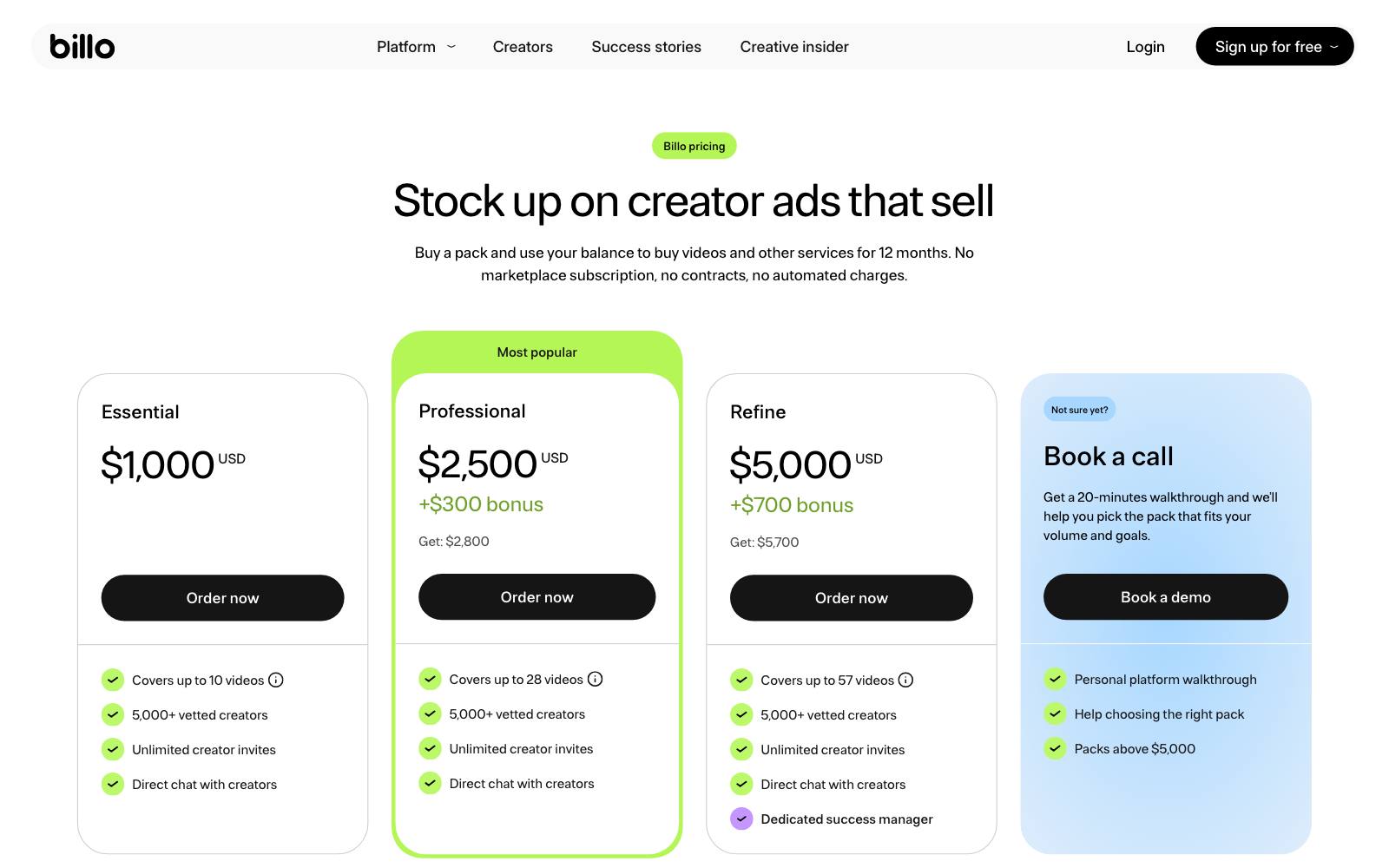
What it does: Billo sells credit packs you spend on individual creator videos and add-ons like extra hooks or captions.
You choose creators, and videos start at $99 for a 15-second clip.
Key features:
- Pay per video from prepaid packs
- Add-ons for extra hooks, captions and editing
- Optional CreativeOps and managed service
Pros:
- No subscription or long contract
- 30-day money-back guarantee if you don't find suitable creators
Cons:
- Smallest pack is $1,000 upfront
- Unused balance expires after 12 months
- Longer videos and premium creators cost more than the $99 floor
Pricing: Packs of $1,000, $2,500 (+$300 bonus) and $5,000 (+$700 bonus); videos from $99, as of November 2026 (Billo pricing).
In our archive: inBeat reports health-benefit creator videos for Hurom cut CPA 65% and raised ROAS 300% after replacing discount messaging.
The angle mattered as much as the creator.
Which one is right for you
Just starting, under $5k a month in spend
Use the free Meta Ad Library and TikTok Creative Center for ideas, and Creatify's free or Standard plan if you need quick video tests. Spend the rest on ads.
Ecommerce brand at $10k–$50k a month
Foreplay or Atria for ideas, and Billo for real creator videos. Add Motion once several people make creative.
Info products, coaching or call funnels
Hyros, because its tracking is built around calls and long sales cycles.
Multi-channel DTC brand at $100k+ a month
Northbeam for attribution plus Motion for creative reporting.
At this size, many brands also bring in a media buyer to make sense of the data.
What to look for in paid ads tools
- Your bottleneck: buy for the job that limits you now (ideas, making, reading or measuring), not the longest feature list.
- Spend-based pricing: analytics and attribution tools often scale with ad spend or tracked revenue, so check the next tier up.
- Platforms covered: make sure it supports Meta, TikTok, Google or YouTube, whichever you actually run.
- Seats: some plans include one user; creative teams need more.
- Trial or refund: prefer tools you can try before an annual contract.
- Vendor claims: treat case studies on a vendor's own site as vendor-reported, and test on your account.
- Overlap: don't pay twice for the same ad library or reports.
Real results behind these tools
Watch out for
Tool stacking: five subscriptions at $100–$1,000 each can cost more than a month of testing budget for a small account.
Trusting one dashboard: attribution tools disagree with each other and with Meta.
Use holdout tests where you can, like the brand search test above.
AI sameness: if everyone uses the same templates, ads start to look alike. Start from your own angle research.